
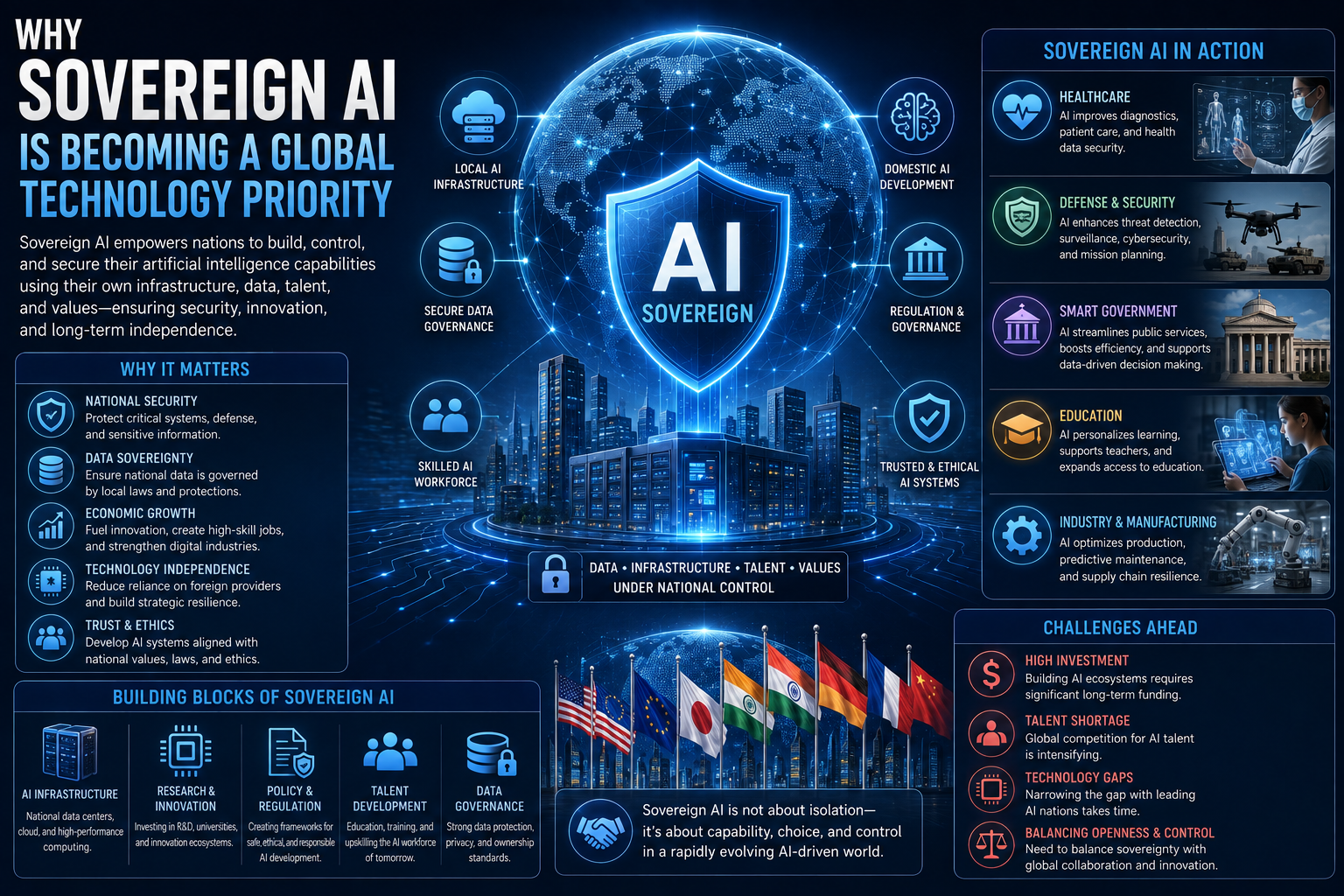
Why Sovereign AI Is Becoming a Global Technology Priority
Why Sovereign AI Is Becoming a Global Technology Priority – Artificial intelligence is rapidly becoming one of the most important technologies of the modern era. From healthcare and finance to manufacturing, defense, education, and government services, AI is reshaping economies and transforming how societies operate. As nations increasingly rely on artificial intelligence to drive innovation and competitiveness, a new concept has emerged at the center of global technology discussions: Sovereign AI.
Sovereign AI refers to a country’s ability to develop, control, and deploy artificial intelligence technologies using its own infrastructure, data, talent, and regulatory frameworks. Rather than depending entirely on foreign technology providers, governments and organizations are seeking greater autonomy over AI systems that influence national security, economic development, public services, and digital sovereignty.
In 2026, Sovereign AI has become a strategic priority for many countries. Concerns about data privacy, geopolitical tensions, technological dependence, cybersecurity risks, and economic competitiveness are driving governments to invest heavily in domestic AI capabilities. As AI increasingly shapes the future of nations, Sovereign AI is emerging as a cornerstone of national technology strategies worldwide.
What Is Sovereign AI?
Sovereign AI is the concept of maintaining national control over artificial intelligence technologies, infrastructure, and data.
The goal is to ensure that critical AI systems operate according to a country’s laws, values, security requirements, and economic interests.
A Sovereign AI strategy typically includes:
- Domestic AI infrastructure
- National data governance
- Local AI development capabilities
- AI research and innovation programs
- Skilled AI workforce development
- Regulatory and ethical frameworks
- Secure cloud and computing resources
Rather than relying solely on foreign AI platforms, countries seek to establish independent capabilities that support long-term technological resilience.
Why Sovereign AI Is Gaining Importance
Several global trends are accelerating interest in Sovereign AI.
Artificial Intelligence as Critical Infrastructure
AI is increasingly viewed as a strategic technology similar to:
- Energy systems
- Telecommunications networks
- Transportation infrastructure
- Financial systems
Because AI influences critical sectors, governments want greater control over how these systems are developed and managed.
Geopolitical Competition
Artificial intelligence has become a major area of international competition.
Countries recognize that leadership in AI can provide advantages in:
- Economic growth
- National security
- Scientific research
- Industrial innovation
As a result, governments are investing heavily in domestic AI ecosystems.
Data Sovereignty Concerns
Data is the foundation of modern AI systems.
Many governments are concerned about sensitive information being stored, processed, or controlled by foreign entities.
Sovereign AI initiatives help ensure that critical national data remains subject to local laws and oversight.
Reducing Technology Dependence
Heavy reliance on external technology providers can create vulnerabilities.
Countries seek to reduce dependence on foreign AI infrastructure and services to improve resilience and strategic autonomy.
The Connection Between AI and National Security
National security is one of the strongest drivers behind Sovereign AI initiatives.
AI technologies increasingly support:
- Defense systems
- Intelligence analysis
- Cybersecurity operations
- Border security
- Emergency response
- Critical infrastructure protection
Governments want assurance that these systems remain secure and aligned with national interests.
Protecting Strategic Assets
Sensitive defense and intelligence data must be protected from unauthorized access and external influence.
Domestic AI infrastructure provides greater control over security measures.
Cybersecurity Advantages
AI-powered cybersecurity systems help detect threats, identify vulnerabilities, and respond to attacks more effectively.
Maintaining control over these capabilities is becoming increasingly important.
Economic Benefits of Sovereign AI
Beyond security considerations, Sovereign AI can generate significant economic advantages.
Supporting Local Innovation
Investments in domestic AI ecosystems encourage innovation among:
- Startups
- Research institutions
- Universities
- Technology companies
This stimulates economic growth and technological advancement.
Creating High-Skill Jobs
AI development requires expertise in areas such as:
- Data science
- Machine learning
- Software engineering
- Cloud computing
- Cybersecurity
Sovereign AI initiatives often create new employment opportunities in high-value sectors.
Strengthening Digital Economies
Countries with strong AI capabilities are better positioned to compete in the global digital economy.
AI-driven industries are expected to contribute significantly to future economic growth.
The Importance of National Data Control
Data is often described as the fuel that powers artificial intelligence.
AI models rely on vast amounts of information to learn patterns and make decisions.
Sensitive Data Protection
Governments and organizations manage large volumes of sensitive information, including:
- Healthcare records
- Financial data
- Government documents
- Infrastructure information
- Citizen identities
Sovereign AI strategies help ensure that this information remains protected.
Regulatory Compliance
Many countries have established strict regulations governing data usage and privacy.
Domestic AI infrastructure can help organizations comply with these requirements more effectively.
Trust and Transparency
Citizens are increasingly concerned about how their information is collected and used.
Local oversight may improve trust in AI systems.
Building Domestic AI Infrastructure
One of the core components of Sovereign AI is the development of domestic infrastructure.
AI Data Centers
Modern AI systems require powerful computing resources.
Countries are investing in:
- Data centers
- High-performance computing facilities
- GPU clusters
- AI supercomputers
These resources support local AI development and deployment.
National Cloud Platforms
Governments increasingly support sovereign cloud initiatives that provide secure environments for sensitive workloads.
Advanced Semiconductor Capabilities
AI depends heavily on advanced computer chips.
Many countries are investing in semiconductor manufacturing and supply chain resilience to support AI growth.
Sovereign AI and Public Services
Governments are using AI to improve public services across multiple sectors.
Healthcare
AI supports:
- Medical diagnostics
- Healthcare administration
- Resource allocation
- Disease monitoring
Sovereign AI ensures that healthcare data remains under national control.
Education
AI-powered educational tools help personalize learning and improve access to educational resources.
Transportation
Intelligent transportation systems optimize traffic management and public transit operations.
Government Administration
AI can improve efficiency in public service delivery, reducing costs and administrative burdens.
The Role of Local Language Models
Language is an important aspect of Sovereign AI.
Many global AI systems primarily focus on widely spoken languages.
However, countries often require AI models optimized for:
- Local languages
- Regional dialects
- Cultural contexts
- National regulations
Developing domestic language models helps ensure that AI systems serve local populations effectively.
Preserving Cultural Identity
Sovereign AI initiatives often support cultural preservation by incorporating local knowledge and values into AI systems.
Challenges Facing Sovereign AI
While Sovereign AI offers significant benefits, it also presents several challenges.
High Development Costs
Building AI infrastructure requires substantial investments.
Developing advanced computing resources, research facilities, and skilled workforces can be expensive.
Talent Shortages
Many countries face shortages of experienced AI professionals.
Competition for skilled workers is intense.
Technology Gaps
Some nations may struggle to match the capabilities of established global technology leaders.
Bridging these gaps requires long-term investment and strategic planning.
Maintaining Innovation
Governments must balance sovereignty goals with openness to international collaboration and innovation.
Excessive isolation can hinder technological progress.
Global Approaches to Sovereign AI
Countries around the world are pursuing Sovereign AI strategies in different ways.
National AI Strategies
Many governments have launched comprehensive AI roadmaps focused on:
- Research funding
- Infrastructure development
- Workforce training
- Ethical governance
Public-Private Partnerships
Collaboration between governments and technology companies is common.
These partnerships help accelerate AI development while leveraging private-sector expertise.
Regional Collaboration
Some countries cooperate with neighboring nations to build shared AI capabilities and digital infrastructure.
AI Regulation
Policymakers continue developing frameworks that address:
- Safety
- Transparency
- Accountability
- Privacy
- Ethical use
These regulations help establish trust in AI systems.
Sovereign AI and Global Competitiveness
Artificial intelligence is becoming a key determinant of national competitiveness.
Countries that successfully develop Sovereign AI capabilities may gain advantages in:
- Innovation
- Productivity
- Research
- Industrial development
- National security
AI leadership is increasingly viewed as a strategic asset comparable to leadership in energy, manufacturing, or telecommunications.
As AI adoption expands across industries, the importance of technological independence continues to grow.
Future Trends in Sovereign AI
Several developments are expected to shape the future of Sovereign AI.
Expansion of National AI Infrastructure
More countries will invest in AI data centers, cloud platforms, and supercomputing resources.
Growth of Domestic AI Models
Nations will increasingly develop AI systems tailored to local languages, cultures, and regulatory requirements.
Increased Focus on AI Governance
Governments will strengthen policies addressing safety, transparency, and accountability.
Stronger International Competition
Global competition for AI leadership is likely to intensify.
Greater Collaboration
Despite competition, international partnerships will remain important for advancing AI research and innovation.
Conclusion
Sovereign AI is becoming a global technology priority as nations recognize the strategic importance of artificial intelligence in shaping economic growth, national security, public services, and digital sovereignty. By investing in domestic infrastructure, local AI development, data governance, and workforce capabilities, countries seek greater control over technologies that increasingly influence every aspect of society.
While challenges related to cost, talent, infrastructure, and innovation remain significant, the benefits of Sovereign artificial Intelligence continue to drive investment and policy development worldwide. As artificial intelligence becomes a foundational technology for the digital age, Sovereign AI will play a critical role in determining how nations protect their interests, foster innovation, and compete in an increasingly AI-driven world.


