
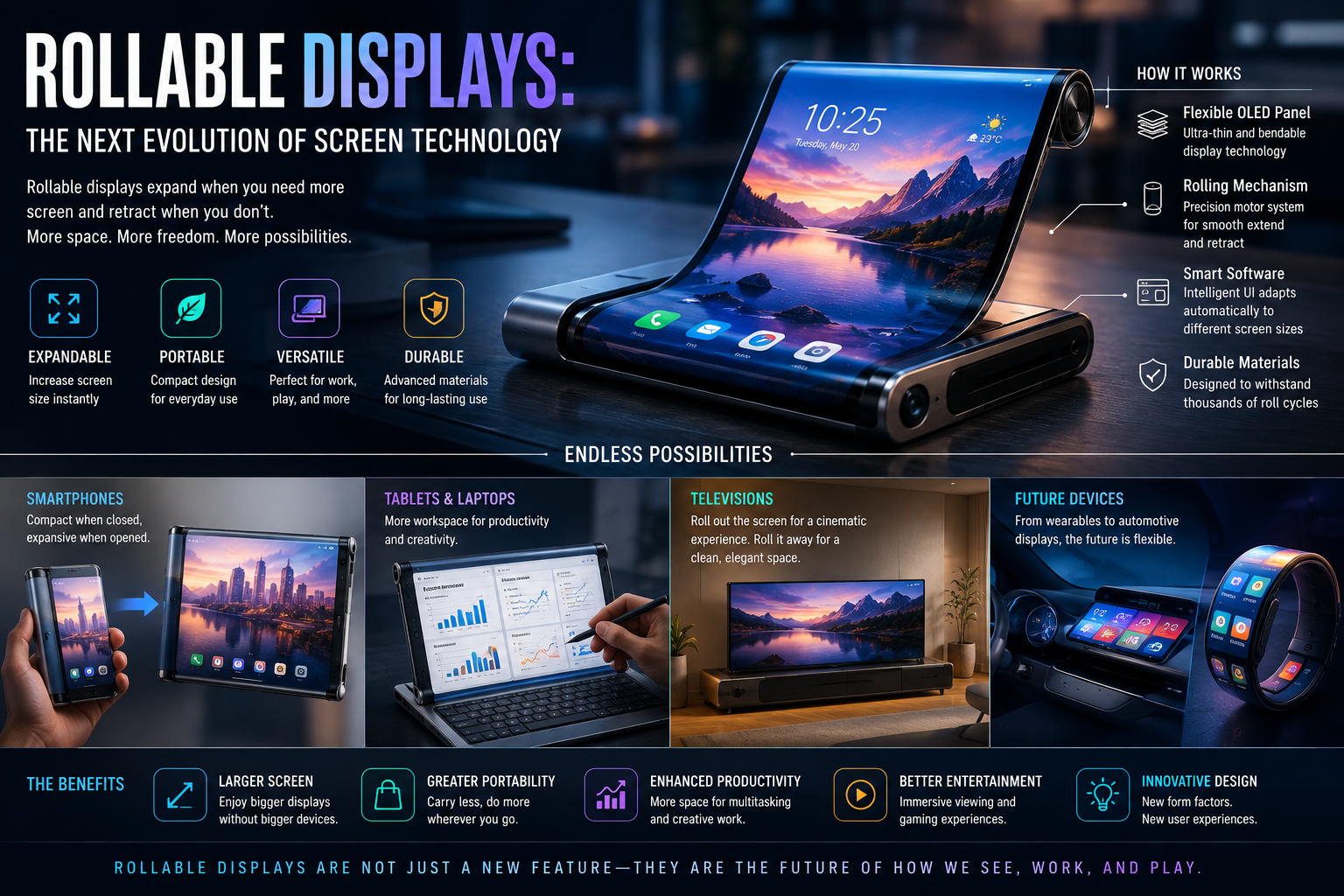
Rollable Displays: The Next Evolution of Screen Technology
Rollable Displays: The Next Evolution of Screen Technology – The world of display technology has evolved dramatically over the past few decades. From bulky cathode-ray tube televisions to ultra-thin OLED panels and foldable smartphones, manufacturers have consistently pushed the boundaries of innovation. Now, a new breakthrough is emerging that could redefine how people interact with digital devices: rollable displays.
Rollable displays represent one of the most exciting developments in consumer electronics. Unlike traditional screens that remain fixed in size, rollable displays can expand or retract depending on user needs. This technology promises to combine portability with larger viewing areas, creating entirely new possibilities for smartphones, tablets, televisions, laptops, and future computing devices.
As manufacturers continue investing in flexible display technologies, rollable screens are increasingly viewed as the next major step in the evolution of digital devices.
What Are Rollable Displays?
A rollable display is a flexible screen that can physically roll in and out of a device, allowing its size to change dynamically.
Unlike foldable displays that bend along a fixed hinge, rollable screens can extend smoothly from a compact form factor into a larger display area. When not in use, the screen can retract into the device housing, making the product more portable.
Most rollable display concepts rely on advanced flexible OLED technology, which allows the screen to bend without damaging the display panel.
This approach offers a unique balance between mobility and screen size, addressing one of the biggest challenges in modern device design.
How Rollable Display Technology Works
Rollable displays rely on several advanced engineering components working together.
Flexible OLED Panels
The foundation of rollable technology is the flexible OLED display.
Unlike traditional glass-based screens, OLED panels can be manufactured on flexible substrates that allow bending and rolling while maintaining image quality.
Rolling Mechanisms
Specialized motors and mechanical systems control the extension and retraction of the display.
These mechanisms must operate smoothly and reliably while protecting the screen from damage.
Durable Materials
Manufacturers use advanced materials designed to withstand repeated rolling and unrolling cycles.
Durability is critical because consumers expect devices to function reliably for years.
Intelligent Software
Software plays an important role in adjusting user interfaces as the display changes size.
Applications can automatically adapt layouts and content to make use of the expanded screen area.
Why Rollable Displays Are Generating Excitement
Several factors are driving interest in rollable display technology.
Larger Screens Without Larger Devices
Consumers increasingly want larger displays for entertainment, productivity, and gaming.
Rollable technology allows devices to provide more screen space without becoming bulky.
Improved Portability
Unlike tablets or large-screen laptops, rollable devices can remain compact when not in use.
This makes them easier to carry while still offering expanded viewing capabilities.
Innovative User Experiences
Rollable screens create opportunities for entirely new interaction models.
Users can adjust screen size based on specific tasks, making devices more versatile and adaptable.
Future Design Possibilities
Rollable displays allow manufacturers to experiment with new product categories that were previously impractical.
This flexibility could reshape the consumer electronics industry.
Rollable Smartphones
One of the most anticipated applications of rollable display technology is the smartphone market.
Modern smartphones face a challenge: users want larger screens, but larger devices are less convenient to carry.
Rollable smartphones address this issue by allowing the display to expand when needed.
Potential benefits include:
- More screen space for multitasking
- Enhanced video viewing
- Improved gaming experiences
- Better productivity tools
- Compact pocket-friendly designs
As the technology matures, rollable phones may become a compelling alternative to foldable devices.
Rollable Televisions
The television industry has already demonstrated some of the most impressive rollable display innovations.
Rollable TVs can disappear into their base when not in use, creating cleaner living spaces and reducing visual clutter.
Advantages include:
- Space-saving designs
- Premium aesthetics
- Flexible viewing options
- Innovative interior integration
These products showcase the potential of rollable technology beyond mobile devices.
Rollable Laptops and Tablets
Future laptops and tablets could also benefit from expandable displays.
A rollable laptop might offer:
- Compact portability during travel
- Larger workspaces when needed
- Enhanced multitasking capabilities
- Improved creative workflows
Professionals who work remotely could particularly benefit from devices that provide larger displays without sacrificing portability.
Gaming and Entertainment Applications
Gaming is another area where rollable displays could have significant impact.
Players often seek larger screens for more immersive experiences.
Rollable gaming devices could provide:
- Expanded gameplay views
- Better visual immersion
- Improved multitasking while gaming
- Portable entertainment systems
Streaming services, video consumption, and mobile gaming are likely to drive consumer interest in these devices.
Benefits of Rollable Displays
Rollable technology offers several compelling advantages over traditional and foldable screens.
Greater Flexibility
Users can adjust display size according to their needs.
This creates a more personalized and adaptable experience.
Enhanced Portability
Devices remain compact when stored or transported.
This is particularly valuable for mobile users.
Improved Productivity
Larger displays support multitasking, document editing, and content creation more effectively.
Better Entertainment Experiences
Expanded screens provide a more immersive environment for watching videos, gaming, and browsing content.
Innovative Design Opportunities
Manufacturers can create new device categories that combine portability with functionality.
Challenges Facing Rollable Displays
Despite their promise, rollable displays still face several challenges.
Durability Concerns
Repeated rolling and unrolling can place stress on display materials and mechanical components.
Manufacturers must ensure long-term reliability.
High Manufacturing Costs
Rollable displays require advanced engineering and specialized production techniques.
This currently makes devices more expensive than conventional alternatives.
Mechanical Complexity
The moving components involved in rollable devices introduce additional engineering challenges.
Reliability remains a key focus for manufacturers.
Software Optimization
Applications and operating systems must adapt seamlessly to changing screen dimensions.
Developers need to design software that takes advantage of expandable displays.
Rollable Displays vs Foldable Displays
Rollable displays are often compared to foldable technology.
Foldable Displays
Advantages:
- More mature technology
- Greater market availability
- Proven consumer demand
Disadvantages:
- Visible creases
- Fixed expansion points
- Larger folded thickness
Rollable Displays
Advantages:
- Seamless screen expansion
- No visible fold line
- More flexible size adjustments
Disadvantages:
- Higher complexity
- Greater engineering challenges
- Limited commercial availability
As technology evolves, both approaches may coexist and serve different consumer preferences.
The Future of Rollable Display Technology
The future of rollable displays appears increasingly promising.
Several trends are expected to accelerate development.
Improved Materials
Advancements in flexible substrates and protective coatings will improve durability and reliability.
Lower Production Costs
As manufacturing processes mature, rollable devices are likely to become more affordable.
Broader Product Adoption
Rollable technology may expand into:
- Smartphones
- Tablets
- Laptops
- Monitors
- Televisions
- Automotive displays
- Wearable devices
Enhanced User Interfaces
Future software will be designed specifically to take advantage of dynamic screen sizes.
This will create more intuitive and productive user experiences.
Impact on the Consumer Electronics Industry
Rollable displays could significantly influence the direction of consumer technology.
Manufacturers are constantly searching for ways to differentiate products in competitive markets.
Rollable technology offers:
- Unique product designs
- New user experiences
- Increased functionality
- Premium market opportunities
Companies that successfully commercialize reliable rollable products may gain significant competitive advantages.
Conclusion
Rollable displays represent the next evolution of screen technology, offering a compelling combination of portability, flexibility, and expanded functionality. By allowing screens to grow and shrink based on user needs, this innovation addresses many limitations of traditional and foldable devices.
From smartphones and tablets to televisions and laptops, rollable displays have the potential to reshape the future of consumer electronics. Although challenges related to durability, cost, and engineering complexity remain, ongoing advancements in flexible OLED technology and manufacturing processes are bringing these devices closer to mainstream adoption.
As technology continues to evolve, rollable displays may become one of the defining innovations of the next generation of digital devices, transforming how people work, communicate, and experience entertainment.


